Reeves says she reserves right to ‘take action’ on taxes ‘at any point’
Rachel Reeves has said she reserves the right to take action “at any point” to bolster the public finances, but has signalled she is unlikely to do so in next year’s Spring Statement.
Appearing at the House of Commons Treasury select committee, the UK chancellor was quizzed on her two tax-raising Budgets and whether she will have to raise more revenue by the end of the parliament.
But Reeves cited her moves to freeze income tax thresholds for longer and increase the government’s “headroom” — its room for fiscal manoeuvre — from £10bn to £22bn.
“I reserve the right to be able to take action at any point but I believe the headroom we have and changes we have made means I won’t need to do that in the spring,” she said.
Under changes introduced by the chancellor, the Office for Budget Responsibility now only judges whether the government is on track to meet its fiscal rules once a year, alongside the autumn Budget.
The OBR will still present a set of forecasts in the spring, and these will make it clear if there has been any deterioration in the fiscal outlook.
Reeves also angrily denied suggestions from Conservative Harriett Baldwin that this month’s package, which took taxation to new highs, failed to include any pro-growth measures.
Appearing alongside senior civil servants, the chancellor expressed her frustration at pre-Budget leaks, including the Financial Times’ report that she had abandoned plans to raise income tax rates.
James Bowler, Treasury permanent secretary, added that the FT story of November 13 was the “main focus” of his Budget leak inquiry.
The committee of MPs said it planned to examine the tax and spending plans in the Budget and their implications for “the economy, public services and government debt”.
The Budget included a heavily backloaded set of tax rises, as well as spending restraint intended to come into effect at the end of the parliament.
Despite the pressure on the public finances, the chancellor ruled out replacing the pensions triple lock with a “single lock” for the rest of the parliament.
Surveys of consumer spending and retail sales published this week both blamed uncertainty surrounding the Budget for economic weakness in November.
The OBR’s role has also come under scrutiny, after it accidentally published its market-sensitive Budget forecasts early.
Reeves ‘not trying to shy away’ from reality that people will pay more tax
Reeves denied a suggestion that her Budget broke the Labour government’s manifesto pledges to not raise tax on working people.
The manifesto raised taxes by £26bn, including through freezing personal tax thresholds extended from April 2028 until April 2031.
“Our manifesto was very clear,” she said, explaining that Labour’s promises centred on income tax, national insurance and VAT, none of which was raised.
“I’m not trying to shy away from it in any way,” she added, “everyone makes a contribution through freezing those thresholds?.?.?.?working people will pay, from 2028, a bit more in tax.”
She also dismissed a suggestion that an income tax rise would have been more progressive than freezing thresholds.
Reeves says she can act ‘at any point’ to bolster finances but Budget has lowered need
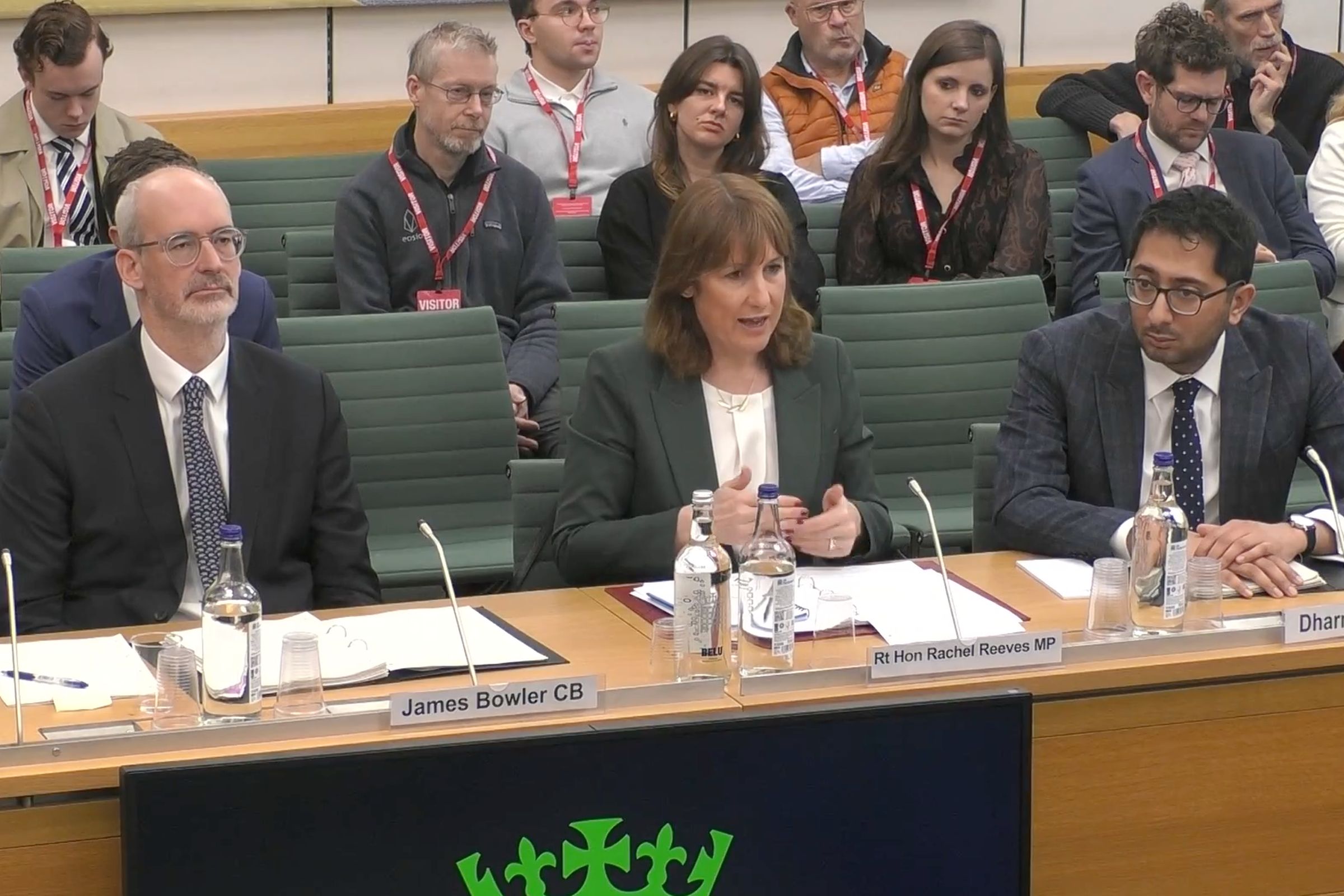
Chancellor Rachel Reeves said she reserved the right to take action “at any point” to bolster the public finances, but added that by increasing headroom and adjusting the fiscal timetable she would not need to do that in the Spring Budget.
Her comments followed a question from Bobby Dean MP of the Liberal Democrats asking how big a fiscal deterioration would be needed to prompt any changes in the spring.
Reeves said:
I reserve the right to be able to take action at any point but I believe the headroom we have and changes we have made means I won’t need to do that in the spring. But of course I reserve the right at any time to take action.
Reeves has changed her framework so that the Office for Budget Responsibility now only judges whether the government is on track to meet its fiscal rules once a year, alongside the Autumn Budget.
But the OBR will still present a set of forecasts in the spring, and these will make it clear if there has been any deterioration in the fiscal outlook. Reeves has vowed to hold only one fiscal event a year.